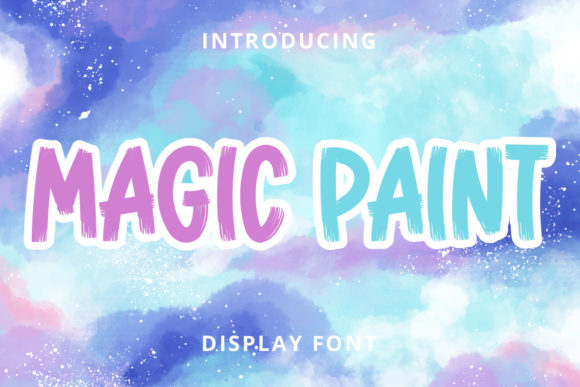
Magic Paint Font: Playful & Polished Display Type for Crafters
If you’ve ever spent 20 minutes scrolling through font libraries trying to find *that one* typeface that feels both joyful and trustworthy—something your customers instantly connect with on a candle label, wedding invite, or printable planner page—you’ll understand why Magic Paint landed in my cart and hasn’t left my go-to folder since.
Magic Paint is a display font with undeniable charm: soft rounded edges, gentle bounce in the letterforms, and just enough whimsy to feel handmade—without sacrificing clarity. It’s not overly cutesy or cartoonish. Instead, it strikes a rare balance: friendly enough for a baby shower invitation, refined enough for a boutique soap label, and expressive enough to anchor a farmhouse-style wall sign or seasonal SVG bundle.
I use Magic Paint most often where first impressions matter—on physical product labels, sticker sheets, and printed cards. Its open counters and generous x-height make it highly legible even at small sizes (think 8–10 pt on jar tags or 12 pt on mini gift stickers). When cut on my Cricut Maker or Silhouette Cameo, the curves hold up beautifully—no jagged joins or fragile terminals. For digital printables, I’ve found it renders crisply across devices, whether previewed on an Etsy listing or scaled down for a mobile-friendly planner page.
It shines brightest in short-form, high-impact contexts: shop name banners, greeting card headlines, “Handmade With Love” tags, mug quotes, tote bag slogans, and welcome signs for weddings or baby showers. I recently used Magic Paint for a set of printable Easter egg hunt clues—it gave each clue personality while keeping instructions clear and scannable for kids and adults alike. On product packaging, it adds warmth without looking unprofessional—a huge win when selling handmade goods where perceived quality directly affects pricing and trust.
For wedding stationery, Magic Paint works especially well on welcome boards, menu cards, and envelope addressing (paired with a delicate script for names). Its playful tone softens formal layouts, making them feel personal rather than stiff. In holiday collections, it brings levity to “Merry & Bright” ornaments or “Cozy Season” mugs—never competing with illustrations, but always enhancing them.
Readability does depend on context, so here’s what I’ve learned through trial: avoid using Magic Paint for full paragraphs or body text. It’s designed as a display font—not a workhorse serif or sans serif. But for titles, headers, quotes, and decorative phrases? It delivers consistency and charm every time. When printed on kraft paper or pastel cardstock, its subtle contrast makes it pop without shouting. And unlike some display fonts, Magic Paint remains legible in low-ink settings—perfect for minimalist packaging or eco-friendly label printing.
Pairing Magic Paint thoughtfully expands its versatility. I often combine it with a clean, neutral sans serif like Montserrat or Inter for body copy on invitations or product descriptions—this creates visual hierarchy and keeps things grounded. For a more organic feel, I’ll layer it with a natural-looking handwritten font for names or signatures. And yes—I’ve even paired it with a quiet serif like Lora for vintage-inspired bakery tags, letting Magic Paint carry the brand voice while the serif handles detail work. The key is contrast: Magic Paint brings energy; your pairing font brings structure.
The file package includes OTF and TTF formats—essential for compatibility across design tools, cutting machines, and print-on-demand platforms. While Magic Paint doesn’t include extensive language support or dozens of stylistic alternates, it offers smart, usable ligatures and a few thoughtful swashes (mainly on capital letters), which add polish to logos or monogrammed SVGs without overcomplicating production. There’s no heavy shadow or outline built in—so you retain full control over color, stroke, and effects in your final files.
One practical note many crafters overlook: Magic Paint is licensed for commercial use. That means you can confidently use it in client projects, sell physical products with Magic Paint–designed labels or signage, create and distribute digital downloads (like Canva templates or printable bundles), and even apply it to merchandise like shirts, mugs, and tote bags—as long as your license permits. Always double-check the included license terms before launching a new product line, especially if you’re bundling fonts with SVGs or editable design assets.
In my shop, Magic Paint has become the quiet hero behind several bestsellers: a set of floral-themed greeting card templates, a collection of editable baby milestone stickers, and a seasonal line of farmhouse-style kitchen prints. Customers comment on how “happy” and “inviting” the typography feels—and that emotional resonance translates directly into engagement and repeat purchases.
What sets Magic Paint apart isn’t just how it looks—but how it behaves across real-world craft applications. It cuts cleanly, prints reliably, scales gracefully, and pairs intuitively. It doesn’t demand extra design labor to look intentional. And for makers juggling creation, production, and marketing, that kind of dependable performance isn’t just nice—it’s necessary.
Whether you’re designing your first Etsy listing or refreshing your entire brand identity, Magic Paint earns its place as a core display font—not because it’s flashy, but because it’s functional, friendly, and quietly confident in its role.